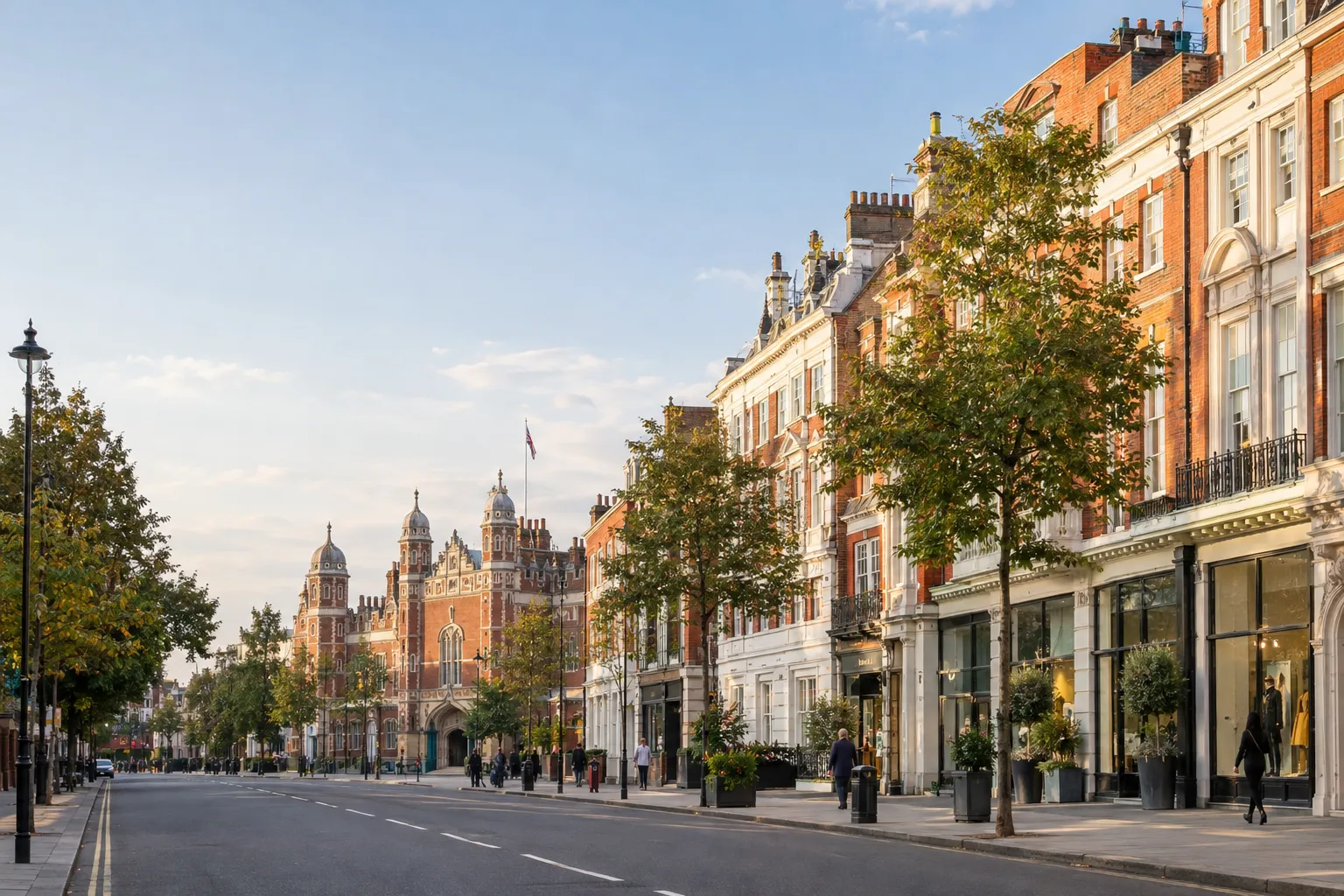
Chelsea makes most sense when its varied settings are allowed to sit alongside one another. These stops offer a route from street life to art, gardens, history and the river without turning a visit into a race.
A first impression of Chelsea
Chelsea rewards a visit that leaves room for contrasts. Its familiar image is one of elegant streets and independent shops, but the neighbourhood is more varied than a single sweep along King’s Road suggests. A contemporary art gallery sits within a historic institutional setting; a garden devoted to the history and uses of plants lies behind a quieter entrance; and the riverside offers a different scale from the busy commercial streets inland.
For a first visit, think in terms of a few connected experiences rather than a checklist. King’s Road and Sloane Square make a natural centre, while Saatchi Gallery, Chelsea Physic Garden and Royal Hospital Chelsea each give the day a different emphasis. The right combination depends on whether you want to browse, spend time with art, learn about plants or explore Chelsea’s civic and military history. Allow time between stops, check visitor details directly and keep the itinerary flexible.
King’s Road and Sloane Square: the everyday Chelsea
The name Chelsea often brings King’s Road to mind, and the street remains a useful way to understand the area’s public life. It is a place to browse shops, pause for a meal and observe the changing rhythm of the neighbourhood. Rather than treating it as a destination to race along, choose a stretch that suits your interests and leave room for the surrounding streets. The appeal is partly in the transitions: lively retail frontage giving way to quieter residential streets, then opening into a square or cultural stop.
Sloane Square provides a convenient reference point for orienting a visit. It connects naturally with King’s Road and sits close to Saatchi Gallery, making it a practical starting point for a walk that combines shopping and art. The Gallery’s visitor information gives its address as King’s Road, SW3 4RY, and places it around 300 yards from Sloane Square. That is a useful scale for planning, but do check the current route and access arrangements before setting out.
A thoughtful day does not need to cover every shop or attraction. If browsing is the priority, give King’s Road the time it deserves and choose one additional visit nearby. If art is central, start with the Gallery and let the street become the relaxed second act. This simple decision helps keep the day distinctive rather than overfilled.
Saatchi Gallery: contemporary art in a historic setting
Saatchi Gallery offers a contemporary counterpoint to Chelsea’s traditional streetscape. Located at Duke of York’s HQ on King’s Road, it is a good anchor for an itinerary built around current exhibitions and visual culture. A gallery visit is inherently dependent on what is on view, so consult the Gallery’s official visitor information for exhibitions, opening details, admission and any access guidance before travelling.
Rather than rushing through the rooms, allow the exhibition to set the pace. Contemporary art can invite a slower, more open-ended kind of looking: some works reward close attention, while others make their point through scale, placement or the atmosphere of the room. If you are visiting with companions, leaving a little time afterwards to discuss what stayed with you can make the visit feel more complete.
The location also makes it easy to connect art with the wider neighbourhood. Sloane Square is close by, and King’s Road provides options for a meal or a further walk. Avoid assuming that gallery access, ticketing or a particular exhibition is available on the day you arrive; these are matters for the Gallery’s own current information.
Chelsea Physic Garden: a slower, greener perspective
Chelsea Physic Garden offers a markedly different experience from a gallery or shopping street. A visit shifts attention outdoors, towards plants, cultivation and the ways people have studied the natural world. Its own visitor information describes ticketed entry and notes that glasshouses are included with admission. It also describes volunteer-led tours that typically take place from April to October, last about 45 minutes and may not be available at every visit. Check the Garden’s current information for dates, tickets and tour arrangements rather than building an itinerary around an assumed session.
The garden is best treated as a destination in its own right, not a brief stop to squeeze between several fixed appointments. Take time to look closely and notice the change of mood from the surrounding streets. A visit may suit someone seeking a quieter interlude, but the Garden’s specific facilities and access arrangements should be checked directly if they matter to your plans.
For a balanced day, pair the Garden with one other substantial activity, rather than trying to combine it with every attraction in the area. The contrast works particularly well: a morning among plants followed by a leisurely lunch or a later walk through Chelsea’s streets. Check travel details and entry information before departure, especially if your visit depends on a tour or a particular part of the site.
Royal Hospital Chelsea: history, tours and the Flower Show
Royal Hospital Chelsea brings a strong historical dimension to the neighbourhood. Its identity is closely associated with the Chelsea Pensioners, and the institution’s visitor information describes tours led by Chelsea Pensioners. These typically last about 90 minutes and can sometimes extend to two hours. Tours and visitor arrangements are subject to the Hospital’s own current information, so check availability and entry details before making plans.
The Hospital grounds also provide the setting for the RHS Chelsea Flower Show. The RHS identifies the showground as the Royal Hospital Chelsea and publishes event-specific visitor and accessibility information. The show is a distinct event, not a permanent feature of a routine neighbourhood visit. Dates, tickets, access arrangements and what is open should always be confirmed through the RHS before travelling.
These two experiences are related by place but serve different interests. A Hospital tour focuses on the institution and its history; the Flower Show is a scheduled horticultural event with its own arrangements. If either is central to your visit, plan around the official information and keep other activities secondary. Do not assume that event access, a tour or entry to the grounds is available simply because you are in the area.
The Embankment and a more unhurried Chelsea
A Chelsea itinerary becomes more memorable when it changes pace. The Thames Embankment provides a riverside perspective that feels different from King’s Road’s shops and the more enclosed atmosphere of a garden or gallery. It can work as a gentle endpoint to a day or as a pause between indoor visits. Keep expectations grounded: the river is a setting for a walk and a change of view, not a substitute for checking specific attractions or access arrangements.
One useful approach is to organise the day around a main purpose and one complementary stop. For example, a gallery-led visit might continue with a meal and a walk; a garden visit might be followed by a quieter stretch outdoors; a history-focused outing could include time to absorb the surroundings rather than adding a distant destination. The neighbourhood is best enjoyed with breathing space between activities.
If you are arranging private transport for a London journey, Chelsea Chauffeur is an online travel guide and referral directory rather than a transport operator. For a practical transport enquiry within its listed London context, SFH Chauffeurs offers London airport transfers and hourly chauffeur hire; the provider handles its own quotations, availability and bookings. This is separate from attraction tickets and does not provide entry to venues. Confirm the specific journey directly with the provider, and check kerbside collection or stopping arrangements for each destination.